Syrmia: Różnice pomiędzy wersjami
| Linia 3: | Linia 3: | ||
[[Plik:Realm of Stefan Dragutin.jpg|right]] | [[Plik:Realm of Stefan Dragutin.jpg|right]] | ||
The '''Realm of Stefan Dragutin'''{{Cref2|a}} ({{lang-sr|Област Стефана Драгутина}} / ''Oblast Stefana Dragutina'') was a medieval [[Serbs|Serb]] kingdom. Initially, it was a vassal kingdom of the [[Kingdom of Hungary (1000–1301)|Kingdom of Hungary]],{{sfn|Fine|1994|p=220}} but subsequently became an independent kingdom, after the collapse of the central power in the Kingdom of Hungary. It was ruled by the Serbian kings [[Stephen Dragutin of Serbia|Stefan Dragutin]] (1282–1316) and his son [[Stephen Vladislav II of Syrmia|Stefan Vladislav II]] (1316–1325). The kingdom was centered in the region of ''[[Lower Syrmia]]'' (today known as [[Mačva]]) and its first capital was [[Debrc]] (between [[Belgrade]] and [[Šabac]]), while residence of the king was later moved to [[Belgrade]]. | The '''Realm of Stefan Dragutin'''{{Cref2|a}} ({{lang-sr|Област Стефана Драгутина}} / ''Oblast Stefana Dragutina'') was a medieval [[Serbs|Serb]] kingdom. Initially, it was a vassal kingdom of the [[Kingdom of Hungary (1000–1301)|Kingdom of Hungary]],{{sfn|Fine|1994|p=220}} but subsequently became an independent kingdom, after the collapse of the central power in the Kingdom of Hungary. It was ruled by the Serbian kings [[Stephen Dragutin of Serbia|Stefan Dragutin]] (1282–1316) and his son [[Stephen Vladislav II of Syrmia|Stefan Vladislav II]] (1316–1325). The kingdom was centered in the region of ''[[Lower Syrmia]]'' (today known as [[Mačva]]) and its first capital was [[Debrc]] (between [[Belgrade]] and [[Šabac]]), while residence of the king was later moved to [[Belgrade]]. | ||
| + | |||
| + | [[File:Koh administrative 1370 01.png|thumb|Administrative units in the south of the Kingdom of Hungary in 1370. Syrmia in the centre in blue.]] | ||
| + | The '''Syrmia County''' was an administrative division of the [[Kingdom of Hungary in the Middle Ages]]. It was established in the 13th century, and included most of what is today [[Serbian Syrmia]]. It was subordinated to the [[Banate of Macsó]]. It was conquered by the Ottomans in 1526. | ||
| + | |||
| + | ==Geography== | ||
| + | The medieval county was situated east of the [[Laćarak]]–[[Susek]] line, and as it was surrounded by the [[Danube]] and [[Sava]] rivers, except for in the west, it was regarded an island.{{sfn|Popović|1990|p=53}} The county borders largely correspond to the modern-day [[Srem District]] in northwestern [[Serbia]]. | ||
| + | |||
| + | ==History== | ||
| + | The [[Theme of Sirmium]] was taken over by the Hungarians in the late 11th century, and Syrmia became contested between the Byzantines and Hungarians over the century. [[Manuel I Komnenos]] retrieved Syrmia in 1162,{{sfn|Engel|2001|p=53}} [[Battle of Sirmium|defended it in 1167]],{{sfn|Makk|1989|pp=89–90}} but eventually lost it to [[Béla III of Hungary|Béla III]] in the 1180s.{{sfn|Fine|1994|p=7}} Its governorship was placed under that of the [[Banate of Macsó]] in the 13th century. | ||
| + | |||
| + | Up until January 1229, the Syrmia County was, in an ecclesiastical sense, subordinated as an archdiocese to the [[Archbishopric of Kalocsa]].{{sfn|Istorisko društvo NR Srbije|1931|p=6}} Then, Pope Gregory IX permitted the establishment of a new bishopric with seat in Bánmonostor (present-day [[Banoštor]]).{{sfn|Istorisko društvo NR Srbije|1931|p=6}} | ||
| + | |||
| + | After Serbian ruler [[Stefan Dragutin]] entered dynastic relations with Hungary, he received in 1284, among other territories, [[Belgrade]], and [[Mačva]], which was known as ''ulterior Sirmia'' in Papal documents.{{sfn|Istorisko društvo NR Srbije|1931|p=6}} Dragutin was known as the "Syrmian king".{{sfn|Popović|1990|p=53}} The Syrmia County was often mentioned in Hungarian charters during Stefan Dragutin's reign in "[[Realm of Stefan Dragutin|Syrmia]]" (1284–1316), as a county in which the kings gave estates to its nobility.{{sfn|Istorisko društvo NR Srbije|1931|p=11}} At the time when the Syrmia County was ostensibly under Serbian rule, [[Charles I of Hungary]] was active in it twice, issuing charters on 1 September 1308 in Pétervárad (present-day [[Petrovaradin]]), and in February 1314 in Szávaszentdemeter (present-day [[Sremska Mitrovica]]) and Pétervárad.{{sfn|Istorisko društvo NR Srbije|1931|p=11}} | ||
| + | |||
| + | Syrmia was conquered by the Ottomans three decades after their conquest of Macsó in 1496, with the [[Battle of Mohács]] (1526) that led to the collapse of Hungary, and Ottoman rule in Pannonia, and subsequently, further into Europe. | ||
| + | |||
| + | ==Counts== | ||
| + | The head of the county was titled ''[[ispán]]'' (Slavic: ''[[župan]]'') — count (''comes''). | ||
| + | |||
| + | {| class="wikitable" style="width: 70%" | ||
| + | |- | ||
| + | ! Count(s) | ||
| + | ! Monarch | ||
| + | |- | ||
| + | | Paul Garai (1323–1328) | ||
| + | | [[Charles I of Hungary|Charles I]] | ||
| + | |- | ||
| + | | John Alsáni (1328–1334) | ||
| + | | Charles I | ||
| + | |- | ||
| + | | Nicholas Ostffy (1335–1339) | ||
| + | | Charles I | ||
| + | |- | ||
| + | | Dominic Ostffy (1340–1353) | ||
| + | | Charles I, [[Louis I of Hungary|Louis I]] | ||
| + | |- | ||
| + | | [[Andrew Lackfi]] (1353–1354){{citation needed|date=January 2016}} | ||
| + | | [[Louis I of Hungary|Louis I]] | ||
| + | |- | ||
| + | | Nicholas Csák (1354–1359) | ||
| + | | Louis I | ||
| + | |- | ||
| + | | [[Nicholas I Garai]] (1359–1375) | ||
| + | | Louis I | ||
| + | |- | ||
| + | | [[John Horvat]] (1375–1381) | ||
| + | | Louis I | ||
| + | |- | ||
| + | | Paul Liszkói (1381–1382) | ||
| + | | Louis I | ||
| + | |- | ||
| + | | Stephen Kórógyi (1382–1385) | ||
| + | | [[Mary, Queen of Hungary|Mary]] | ||
| + | |- | ||
| + | | John Horvat (1385–1386) | ||
| + | | Mary, [[Charles III of Naples|Charles II]] | ||
| + | |- | ||
| + | | John Bánfi de Alsólendva (1386–1387) | ||
| + | | Mary | ||
| + | |- | ||
| + | | [[Nicholas II Garai]] (1387–1390) | ||
| + | | [[Sigismund, Holy Roman Emperor|Sigismund]] | ||
| + | |- | ||
| + | | Stephen Losonci (1390–1392) | ||
| + | | Sigismund | ||
| + | |- | ||
| + | | George Lackfi (1392–1393) | ||
| + | | Sigismund | ||
| + | |- | ||
| + | | Nicholas II Garai (1394) | ||
| + | | Sigismund | ||
| + | |- | ||
| + | | Nicholas Treutel and Stephen Kórógyi (1394–1397) | ||
| + | | Sigismund | ||
| + | |- | ||
| + | | [[Péter Perényi]] and John Maróti (1397){{citation needed|date=January 2016}} | ||
| + | | Sigismund | ||
| + | |- | ||
| + | | Francis Bebek (1397–1400) and John Maróti (1398–1402) and Péter Perényi (1400–1401){{citation needed|date=January 2016}} | ||
| + | | Sigismund | ||
| + | |- | ||
| + | | Stephen Ludányi and Thomas Ludányi (1402) | ||
| + | | Sigismund | ||
| + | |- | ||
| + | | Ladislaus Újlaki (1402–1403) and John Maróti (1402–1410) | ||
| + | | Sigismund | ||
| + | |- | ||
| + | | Ladislaus Újlaki and Emeric Újlaki (1410–1418) | ||
| + | | Sigismund | ||
| + | |- | ||
| + | | Desiderius Garai (1419–1427) | ||
| + | | Sigismund | ||
| + | |- | ||
| + | | John Maróti (1427–1428) | ||
| + | | Sigismund | ||
| + | |- | ||
| + | | Peter Cseh de Léva (1427–1431) and Stephen Újlaki (1429–1430) | ||
| + | | Sigismund | ||
| + | |- | ||
| + | | [[Ladislaus Garai]] (1431–1441) and Desiderius Garai (1431–1438) and [[Nicholas of Ilok|Nicholas Újlaki]] (1438–1458) | ||
| + | | Sigismund, [[Albert II of Germany|Albert]] | ||
| + | |} | ||
| + | |||
| + | ==See also== | ||
| + | *[[Syrmia County]] | ||
| + | |||
| + | ==References== | ||
| + | {{reflist}} | ||
| + | |||
| + | ==Sources== | ||
| + | *{{cite book |last=Engel |first=Pál |year=2001|title=The Realm of St Stephen: A History of Medieval Hungary, 895–1526 |publisher= I.B. Tauris Publishers |isbn=1-86064-061-3|ref=harv}} | ||
| + | *{{cite book | last=Fine |first=John Van Antwerp Jr. |authorlink=John Van Antwerp Fine Jr. |title = The Late Medieval Balkans: A Critical Survey from the Late Twelfth Century to the Ottoman Conquest | publisher = [[University of Michigan Press]]| place =Ann Arbor | year = 1994 | isbn = 978-0-472-08260-5 |ref=harv}} | ||
| + | *{{cite book|author=Istorisko društvo NR Srbije|editor=Stanoje Stanojević|title=Glasnik|volume=4|url=https://books.google.com/books?id=cWRaiQHaVH0C|year=1931|page=11|quote=<!-- [p. 6:] До јануара 1229 била је Сремска жупанија, у црквеном по- гледу, потчињена као архиђаконат Калочкој надбискупији.11 Тада дозволи папа Гргур IX да се оснује нова бискупија са седиштем у Баноштору (Ке\у).18 Ова бискупија, ... [p. 11:] I. У угарским повељама из времена када је Стефан Дра- гутин владао сремском земљом (1284—1316) јавља се често и Сремска жупанија у којој су угарски краљеви поклањали својој властели добра, као и у осталим жупанијама. ... У време када је Сремска жупанија тобоже била под срп- ском влашћу бавио се у њој два пута Карло Роберт: 1 септем- бра 1308 издаје повеље у Петроварадину, а у фебруару 1314 у Митровици и Петроварадину.15 III.-->|ref=harv}} | ||
| + | *{{cite book |last=Makk |first=Ferenc |year=1989 |title=The Árpáds and the Comneni: Political Relations between Hungary and Byzantium in the 12th century (Translated by György Novák)|publisher=Akadémiai Kiadó |isbn=963-05-5268-X|ref=harv}} | ||
| + | *{{cite book|last=Popović|first=Dušan J.|title=Srbi u Vojvodini|volume=1|url=https://books.google.com/books?id=P-4JAQAAIAAJ|year=1990|publisher=Matica srpska|page=53|ref=harv}} | ||
| + | |||
| + | {{coord missing|Hungary}} | ||
| + | {{Authority control}} | ||
| + | [[Category:Counties of the Kingdom of Hungary in the Middle Ages]] | ||
| + | [[Category:History of Syrmia]] | ||
| + | [[Category:States and territories established in the 13th century]] | ||
| + | [[Category:Medieval history of Vojvodina]] | ||
| + | [[Category:Medieval Serbia]] | ||
| + | [[Category:States and territories disestablished in 1526]] | ||
| + | |||
==Territory== | ==Territory== | ||
Wersja z 11:39, 24 lis 2019
https://en.wikipedia.org/wiki/Realm_of_Stefan_Dragutin
The Realm of Stefan DragutinSzablon:Cref2 (Szablon:Lang-sr / Oblast Stefana Dragutina) was a medieval Serb kingdom. Initially, it was a vassal kingdom of the Kingdom of Hungary,{{#invoke:Footnotes|sfn|template=sfn}} but subsequently became an independent kingdom, after the collapse of the central power in the Kingdom of Hungary. It was ruled by the Serbian kings Stefan Dragutin (1282–1316) and his son Stefan Vladislav II (1316–1325). The kingdom was centered in the region of Lower Syrmia (today known as Mačva) and its first capital was Debrc (between Belgrade and Šabac), while residence of the king was later moved to Belgrade.

The Syrmia County was an administrative division of the Kingdom of Hungary in the Middle Ages. It was established in the 13th century, and included most of what is today Serbian Syrmia. It was subordinated to the Banate of Macsó. It was conquered by the Ottomans in 1526.
Spis treści
Geography
The medieval county was situated east of the Laćarak–Susek line, and as it was surrounded by the Danube and Sava rivers, except for in the west, it was regarded an island.{{#invoke:Footnotes|sfn|template=sfn}} The county borders largely correspond to the modern-day Srem District in northwestern Serbia.
History
The Theme of Sirmium was taken over by the Hungarians in the late 11th century, and Syrmia became contested between the Byzantines and Hungarians over the century. Manuel I Komnenos retrieved Syrmia in 1162,{{#invoke:Footnotes|sfn|template=sfn}} defended it in 1167,{{#invoke:Footnotes|sfn|template=sfn}} but eventually lost it to Béla III in the 1180s.{{#invoke:Footnotes|sfn|template=sfn}} Its governorship was placed under that of the Banate of Macsó in the 13th century.
Up until January 1229, the Syrmia County was, in an ecclesiastical sense, subordinated as an archdiocese to the Archbishopric of Kalocsa.{{#invoke:Footnotes|sfn|template=sfn}} Then, Pope Gregory IX permitted the establishment of a new bishopric with seat in Bánmonostor (present-day Banoštor).{{#invoke:Footnotes|sfn|template=sfn}}
After Serbian ruler Stefan Dragutin entered dynastic relations with Hungary, he received in 1284, among other territories, Belgrade, and Mačva, which was known as ulterior Sirmia in Papal documents.{{#invoke:Footnotes|sfn|template=sfn}} Dragutin was known as the "Syrmian king".{{#invoke:Footnotes|sfn|template=sfn}} The Syrmia County was often mentioned in Hungarian charters during Stefan Dragutin's reign in "Syrmia" (1284–1316), as a county in which the kings gave estates to its nobility.{{#invoke:Footnotes|sfn|template=sfn}} At the time when the Syrmia County was ostensibly under Serbian rule, Charles I of Hungary was active in it twice, issuing charters on 1 September 1308 in Pétervárad (present-day Petrovaradin), and in February 1314 in Szávaszentdemeter (present-day Sremska Mitrovica) and Pétervárad.{{#invoke:Footnotes|sfn|template=sfn}}
Syrmia was conquered by the Ottomans three decades after their conquest of Macsó in 1496, with the Battle of Mohács (1526) that led to the collapse of Hungary, and Ottoman rule in Pannonia, and subsequently, further into Europe.
Counts
The head of the county was titled ispán (Slavic: župan) — count (comes).
| Count(s) | Monarch |
|---|---|
| Paul Garai (1323–1328) | Charles I |
| John Alsáni (1328–1334) | Charles I |
| Nicholas Ostffy (1335–1339) | Charles I |
| Dominic Ostffy (1340–1353) | Charles I, Louis I |
| Andrew Lackfi (1353–1354)Szablon:Citation needed | Louis I |
| Nicholas Csák (1354–1359) | Louis I |
| Nicholas I Garai (1359–1375) | Louis I |
| John Horvat (1375–1381) | Louis I |
| Paul Liszkói (1381–1382) | Louis I |
| Stephen Kórógyi (1382–1385) | Mary |
| John Horvat (1385–1386) | Mary, Charles II |
| John Bánfi de Alsólendva (1386–1387) | Mary |
| Nicholas II Garai (1387–1390) | Sigismund |
| Stephen Losonci (1390–1392) | Sigismund |
| George Lackfi (1392–1393) | Sigismund |
| Nicholas II Garai (1394) | Sigismund |
| Nicholas Treutel and Stephen Kórógyi (1394–1397) | Sigismund |
| Péter Perényi and John Maróti (1397)Szablon:Citation needed | Sigismund |
| Francis Bebek (1397–1400) and John Maróti (1398–1402) and Péter Perényi (1400–1401)Szablon:Citation needed | Sigismund |
| Stephen Ludányi and Thomas Ludányi (1402) | Sigismund |
| Ladislaus Újlaki (1402–1403) and John Maróti (1402–1410) | Sigismund |
| Ladislaus Újlaki and Emeric Újlaki (1410–1418) | Sigismund |
| Desiderius Garai (1419–1427) | Sigismund |
| John Maróti (1427–1428) | Sigismund |
| Peter Cseh de Léva (1427–1431) and Stephen Újlaki (1429–1430) | Sigismund |
| Ladislaus Garai (1431–1441) and Desiderius Garai (1431–1438) and Nicholas Újlaki (1438–1458) | Sigismund, Albert |
See also
References
{{#invoke:Check for unknown parameters|check|unknown=|preview=Page using Template:Reflist with unknown parameter "_VALUE_"|ignoreblank=y| 1 | colwidth | group | liststyle | refs }}
Sources
- Engel, Pál (2001). The Realm of St Stephen: A History of Medieval Hungary, 895–1526. I.B. Tauris Publishers. ISBN 1-86064-061-3.
- Fine, John Van Antwerp Jr. (1994). The Late Medieval Balkans: A Critical Survey from the Late Twelfth Century to the Ottoman Conquest. Ann Arbor: University of Michigan Press. ISBN 978-0-472-08260-5.
- Istorisko društvo NR Srbije (1931). Stanoje Stanojević. ur. Glasnik. 4. str. 11. https://books.google.com/books?id=cWRaiQHaVH0C.
- Makk, Ferenc (1989). The Árpáds and the Comneni: Political Relations between Hungary and Byzantium in the 12th century (Translated by György Novák). Akadémiai Kiadó. ISBN 963-05-5268-X.
- Popović, Dušan J. (1990). Srbi u Vojvodini. 1. Matica srpska. str. 53. https://books.google.com/books?id=P-4JAQAAIAAJ.
Szablon:Coord missing Szablon:Authority control
Territory

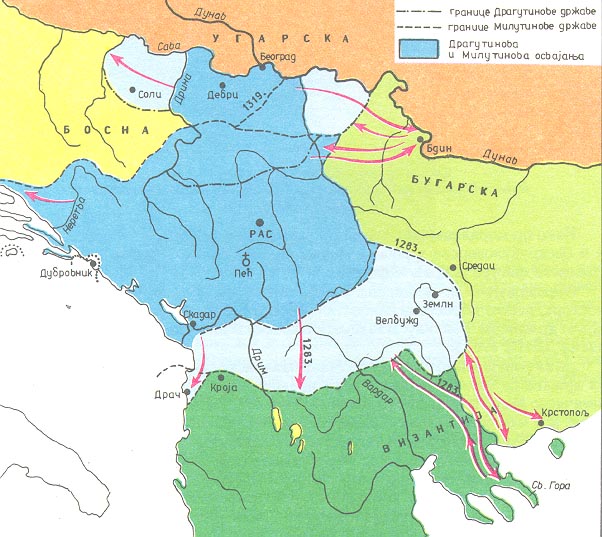
In the Middle Ages, "Syrmia" was the name for a larger area around the river Sava. The part in the north of Sava was known as Upper Syrmia (present-day Syrmia), while the area south of the river was known as Lower Syrmia (present-day Mačva). The kingdom was centered in Mačva, but also included Belgrade, part of Šumadija with Rudnik, and the counties (župe) of Podrinje, Usora, Soli, Braničevo and Kučevo. According to several Serbian historians (Dejan Mikavica, Stanoje Stanojević, Aleksa Ivić, Milojko Brusin, etc.), the kingdom also included Upper Syrmia (modern Syrmia).
History
Stefan Dragutin was initially the king of Serbia from 1276 to 1282. In 1282 he broke his leg while hunting and became ill; he passed the throne to his younger brother Stefan Milutin at the council at Deževo in 1282, while keeping for himself some northern parts of the country (Rudnik and parts of Župa of Podrinje). Since his son Vladislav married a relative of the Hungarian king, Dragutin in 1284 gained from Ladislaus IV the Banates of Só (Soli), Ózora (Usora) and Macsó (Mačva) with Belgrade, which he initially ruled as a Hungarian vassal, until the collapse of the central power in the Kingdom of Hungary. The first capital of his state was Debrc (between Belgrade and Šabac), and later he moved his residence to Belgrade. Dragutin was the first Serb ruler who ruled from Belgrade as the capital.
In roughly 1291 and with the help of Milutin, Dragutin expanded his territory by annexing regions of Braničevo and Kučevo, whose Bulgarian rulers Darman and Kudelin recently became independent from the Kingdom of Hungary.[1] For the first time, that region became part of the Serbian state.{{#invoke:Footnotes|sfn|template=sfn}} This action probably caused the war between the Bulgarian despot Shishman of Vidin and Milutin.
Near the end of his life Stefan Dragutin separated from his Hungarian friends and strengthened his connections in Serbia. He later took monastic vows, and died 1316, buried at the Đurđevi stupovi monastery near Novi Pazar.
After king Dragutin died, his son Vladislav assumed his father's appanage. However, in 1319, Serbian king Milutin, Vladislav's uncle, invaded, defeated and imprisoned Vladislav. When Milutin died in 1321, the newly freed Vladislav recovered his father's lands, with the help of the Hungarians and Stephen II, Ban of Bosnia.Szablon:Cref2
After having been beaten again by supporters of Stefan Dečanski (successor of Milutin), Vladislav retreated to the Kingdom of Hungary in 1324. Vladislav's nephew, Ban Stephen II, reincorporated Soli and Usora into Bosnia. Belgrade and the northern part of Banate of Macsó along the river Sava remained under the rule of the Kingdom of Hungary, while Braničevo and the southern part of Mačva remained Serbian. The kingdoms of Serbia and Hungary would contest Mačva for the next century.
Rulers
| Monarch | Reign |
|---|---|
 Stefan Dragutin |
1282–1316 |
 Vladislav |
1316–1325 |
Annotations
Szablon:Cnote2 Begin Szablon:Cnote2 Szablon:Cnote2 Szablon:Cnote2 End
References
- ↑ Vásáry, István (2005). Cumans and Tatars: Oriental Military in the Pre-Ottoman Balkans, 1185-1365. Cambridge University Press. str. 104. ISBN 9780521837569. https://books.google.com/books?id=7DJWyg97IggC.
{{#invoke:Check for unknown parameters|check|unknown=|preview=Page using Template:Reflist with unknown parameter "_VALUE_"|ignoreblank=y| 1 | colwidth | group | liststyle | refs }}
Sources
- Bataković, Dušan T., ur. (2005) (French). Histoire du peuple serbe. Lausanne: L’Age d’Homme. https://books.google.com/books?id=a0jA_LdH6nsC.
- Ćirković, Sima; Mihaljčić, Rade (1999). Knowledge. https://books.google.com/books?id=AypYAAAAMAAJ.
- Dinić, Mihailo (1978). Српске земље у средњем веку: историјско-географске студије. Српска књижевна задруга. https://books.google.com/books?id=fnTTjgEACAAJ.
- Fine, John Van Antwerp, Jr. (1994). The Late Medieval Balkans: A Critical Survey from the Late Twelfth Century to the Ottoman Conquest. Ann Arbor: University of Michigan Press. ISBN 978-0-472-08260-5. https://books.google.com/books?id=Hh0Bu8C66TsC.
- Mrgić, Jelena; Živković, Tibor (2008). Северна Босна: 13-16. век. Историјски институт. https://books.google.com/books?id=hRoUAQAAMAAJ.
- Orbini, Mauro (1601). Il Regno de gli Slavi hoggi corrottamente detti Schiavoni. Pesaro: Apresso Girolamo Concordia. https://books.google.com/books?id=Fx3OntcdUkQC.
- Орбин, Мавро (1968). Краљевство Словена. Београд: Српска књижевна задруга. https://books.google.com/books?id=MduZAAAAIAAJ.
External links
- Map of Dragutin's and Milutin's state, at the Serbian Government archive web site
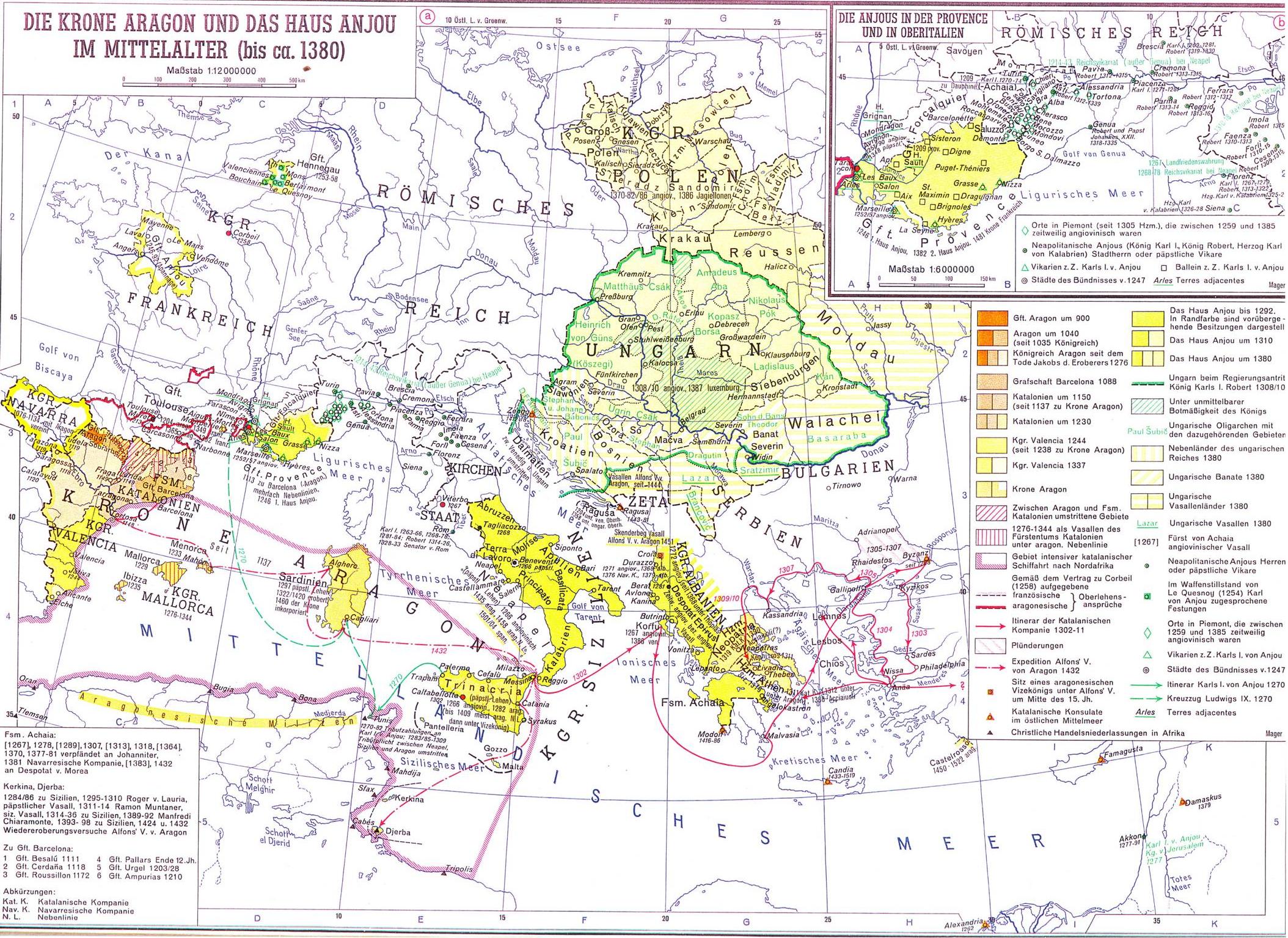
- Map of the realm of Stephan Dragutin, on a map of the crown of Aragon and the house of Anjou in the Middle Ages (up to ca. 1380)"
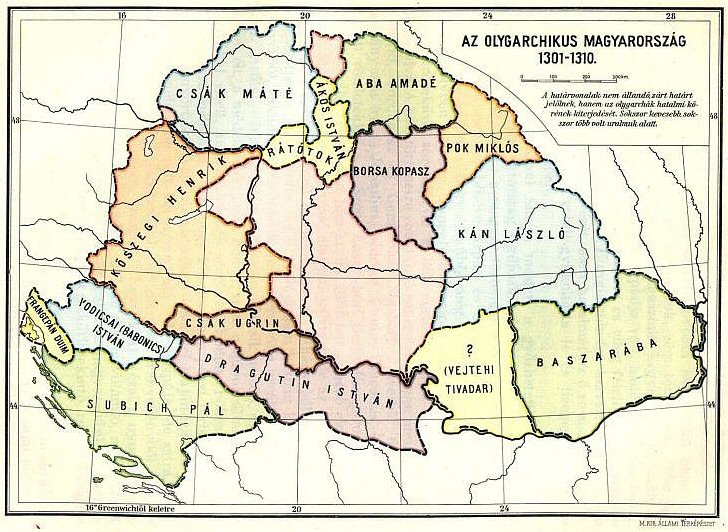
- Map of the realm of Dragutin Istvan, on a map of "Hungarian oligarchs" 1301-1310
- Map of "Tulso Szeremseg", on a map of the Kingdom of Hungary in the 13th century
- Szablon:Webarchive (from book "Hrvatska povijest u 25 karata", written by Stjepan Srkulj and Josip Lučić)
- Strony z odwołaniami do nieistniejących plików
- Pages using reflist with unknown parameters
- Counties of the Kingdom of Hungary in the Middle Ages
- History of Syrmia
- States and territories established in the 13th century
- Medieval history of Vojvodina
- Medieval Serbia
- States and territories disestablished in 1526
- Former countries in the Balkans
- Mačva
- History of Belgrade
- Banate of Bosnia
- 13th century in Serbia
- 14th century in Serbia
- Kingdom of Serbia (medieval)
- Nemanjić dynasty