Chorwacja Panońska: Różnice pomiędzy wersjami
Przejdź do nawigacji
Przejdź do wyszukiwania
| Linia 15: | Linia 15: | ||
|-style="vertical-align:top;" | |-style="vertical-align:top;" | ||
| | | | ||
| + | |||
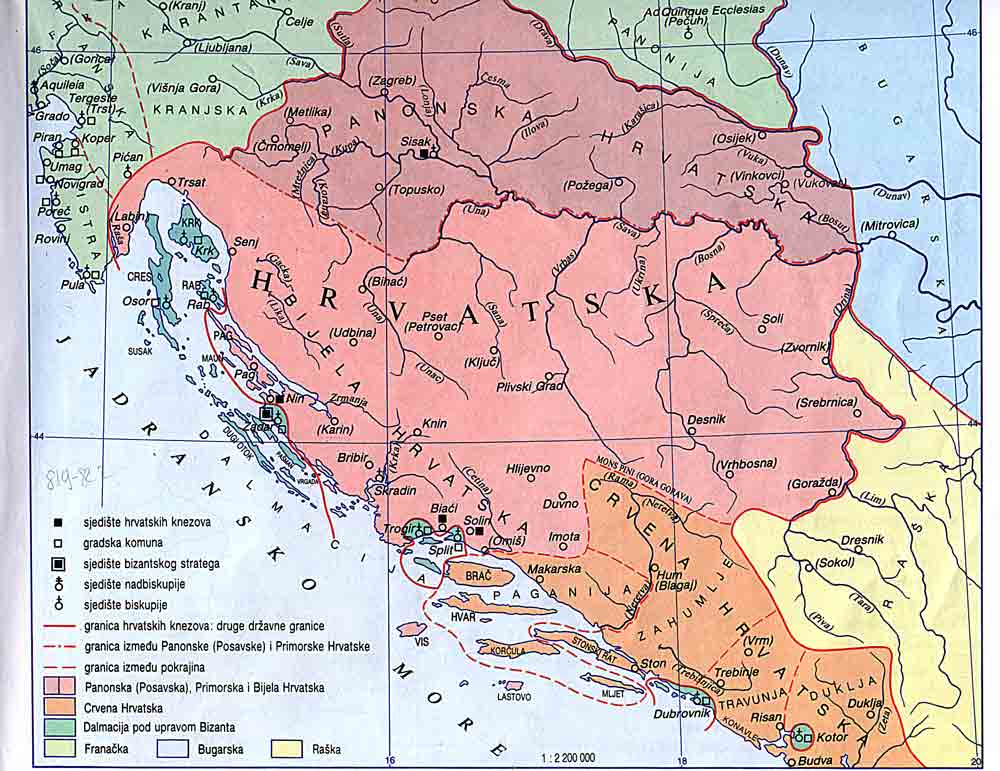
| + | Księstwo Panońskiej Chorwacji () to nazwa używana w chorwackiej historiografii dla średniowiecznego księstwa słowiańskiego od VII do X wieku, położonego na Równinie Panońskiej w przybliżeniu między rzekami Drawą i Sawą w dzisiejszej Chorwacji. [1] Czasami księstwo rozciągało się znacznie na południe od Sawy, obejmując większość jego dorzecza. Jego centrum polityczne znajdowało się w Sisaku. | ||
<small><small><small><small>The '''Duchy of Pannonian Croatia''' ({{lang-hr|Kneževina Panonska Hrvatska}}) is a name used in Croatian historiography for a medieval [[Slavs|Slavic]] duchy from the 7th to the 10th century located in the [[Pannonian Plain]] approximately between the rivers [[Drava]] and [[Sava]] in today's [[Croatia]].<ref>Hrvoje Gračanin, "Od Hrvata pak koji su stigli u Dalmaciju odvojio se jedan dio i zavladao Ilirikom i Panonijom : Razmatranja uz DAI c. 30, 75-78", Povijest u nastavi, Vol.VI No.11 (1) Lipanj 2008, p. 74</ref> At times, the duchy extended considerably to the south of the Sava, encompassing most of its basin. Its political center was in [[Sisak]]. </small></small></small></small> | <small><small><small><small>The '''Duchy of Pannonian Croatia''' ({{lang-hr|Kneževina Panonska Hrvatska}}) is a name used in Croatian historiography for a medieval [[Slavs|Slavic]] duchy from the 7th to the 10th century located in the [[Pannonian Plain]] approximately between the rivers [[Drava]] and [[Sava]] in today's [[Croatia]].<ref>Hrvoje Gračanin, "Od Hrvata pak koji su stigli u Dalmaciju odvojio se jedan dio i zavladao Ilirikom i Panonijom : Razmatranja uz DAI c. 30, 75-78", Povijest u nastavi, Vol.VI No.11 (1) Lipanj 2008, p. 74</ref> At times, the duchy extended considerably to the south of the Sava, encompassing most of its basin. Its political center was in [[Sisak]]. </small></small></small></small> | ||
Wersja z 14:55, 3 cze 2020
| Strona | Autorzy | Nota |
| [1] | [2] | Ten artykuł został przetłumaczony z Wikipedii w języku angielskim. Treści pochodzące z Wikipedii w języku angielskim są oparte na licencji Creative Commons 3.0 – Uznanie Autorstwa – Na tych samych warunkach. Kopiując je lub tłumacząc, należy podać ich autorów i udostępnić na tych samych warunkach. |
|
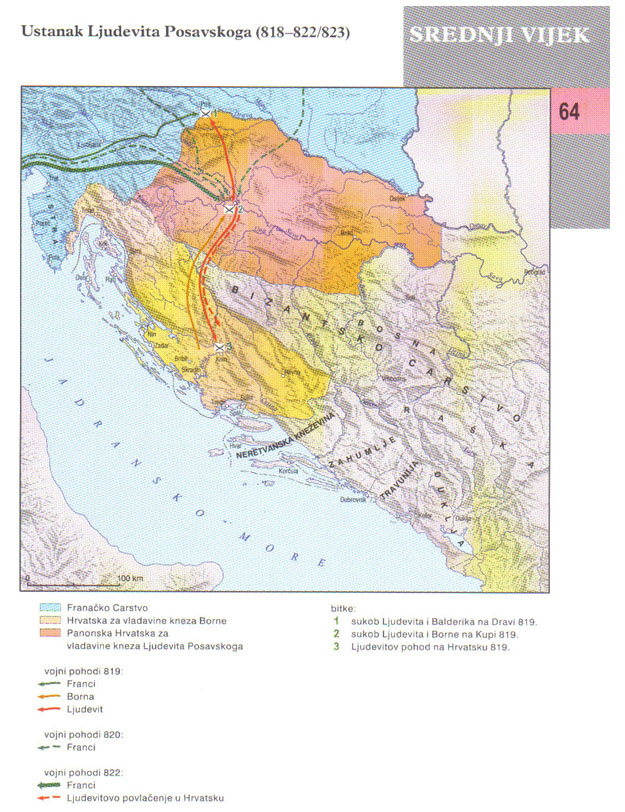
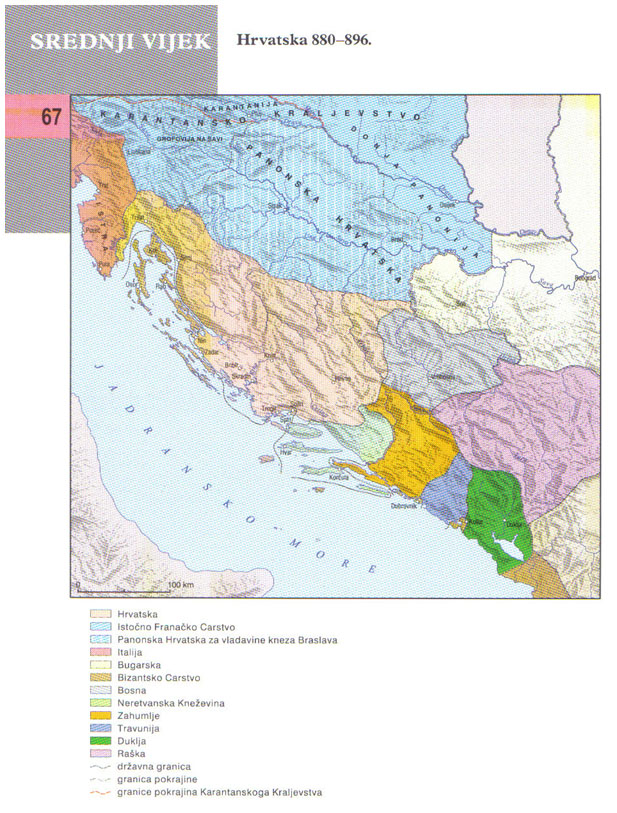
Księstwo Panońskiej Chorwacji () to nazwa używana w chorwackiej historiografii dla średniowiecznego księstwa słowiańskiego od VII do X wieku, położonego na Równinie Panońskiej w przybliżeniu między rzekami Drawą i Sawą w dzisiejszej Chorwacji. [1] Czasami księstwo rozciągało się znacznie na południe od Sawy, obejmując większość jego dorzecza. Jego centrum polityczne znajdowało się w Sisaku. The Duchy of Pannonian Croatia () is a name used in Croatian historiography for a medieval Slavic duchy from the 7th to the 10th century located in the Pannonian Plain approximately between the rivers Drava and Sava in today's Croatia.[1] At times, the duchy extended considerably to the south of the Sava, encompassing most of its basin. Its political center was in Sisak. Spis treściHistorySlavs came to the territory of the former Roman province Pannonia in the late 6th and early 7th century, as evidenced by many archeological finds. According to De administrando imperio, at the time of the rule of Emperor Herakleios (610–640), Croats arrived in Dalmatia, founded a duchy there and, shortly afterward, a part of them went to the north to Pannonia and founded another duchy there (Pannonian Croatia). In the late 7th century or in the 8th century, the Duchy became vassalaged to the Avar Empire, as archaeological finds suggest.Szablon:Citation needed After the defeat of the Avar Empire by Frankish troops, Duke Vojnomir was assigned the Duchy as a vassal of the Frankish margrave of Friuli.[2]Szablon:Better source The Duchy failed to end Frankish domination during a rebellion under Duke Ljudevit Posavski in the early 9th century. In 827, the Bulgarians invaded and conquered the Duchy and parts of territories to the north of it. In 829 they imposed a local Duke Ratimir as the new ruler of Pannonian Croatia in their name.Szablon:Citation needed The Franks however claimed the territory, which in their view belonged (since 827) to the March of Carantania and thus under the rule of Count RatbodSzablon:Dubious, who had been head of the Avar March and March of Carantania since 828. In 838, Ratbod deposed Ratimir and subordinated the Duchy to the Frankish March of Carantania. Another known ruler of Pannonian Croatia was Braslav, who ruled there in 880–898 or 900, still vassalaged to the Kingdom of East Francia. In the 10th century, under Duke (later King) Tomislav, the Duchy of Pannonian Croatia might have been united with Littoral Croatia to form the Kingdom of Croatia.[3] The sources of the extent of Tomislav's kingdom are however conflicting. Rulers
See alsoReferences
External links |
| |||||||||||||||||||||||||


.svg)


